Resident experience
Organize services, departments, contacts, notices, meetings, documents, forms, payments, events, locations, and emergency information around public tasks.
Government website platform
Give residents a faster path to information while giving authorized staff a clearer way to keep it current.
CMS Max supports .gov websites, managed infrastructure, role-friendly publishing, forms, documents, events, notices, search foundations, and accessibility work for municipalities and public agencies.
Public information is operational infrastructure
A public website must help people find services, understand requirements, submit information, access documents, follow meetings, and know where to get help. It also needs publishing ownership, accessibility procedures, records discipline, security review, and dependable support.
Organize services, departments, contacts, notices, meetings, documents, forms, payments, events, locations, and emergency information around public tasks.
Assign publishing roles, review steps, reusable content, document ownership, expiration dates, urgent-update procedures, and service-level expectations.
Document accessibility, security, privacy, records, integrations, backups, recovery, analytics, procurement, vendor, and escalation responsibilities.
Government website capabilities
Give staff controlled tools for departments, services, boards, policies, emergency updates, public notices, announcements, and shared content.
Create understandable document libraries with useful labels, dates, categories, ownership, archive rules, accessible formats, and search paths.
Support approved contact, application, permit, registration, payment, upload, and routing workflows with clear privacy, records, and response rules.
Publish meetings, calendars, facilities, departments, staff contacts, employment opportunities, alerts, and local resources in structured experiences.
Use clear information architecture, mobile layouts, browser titles, descriptions, internal links, sitemaps, redirects, and measured search behavior.
Connect approved services with scoped data, security, consent, retention, accessibility, monitoring, ownership, and failure handling.
Live CMS Max government websites
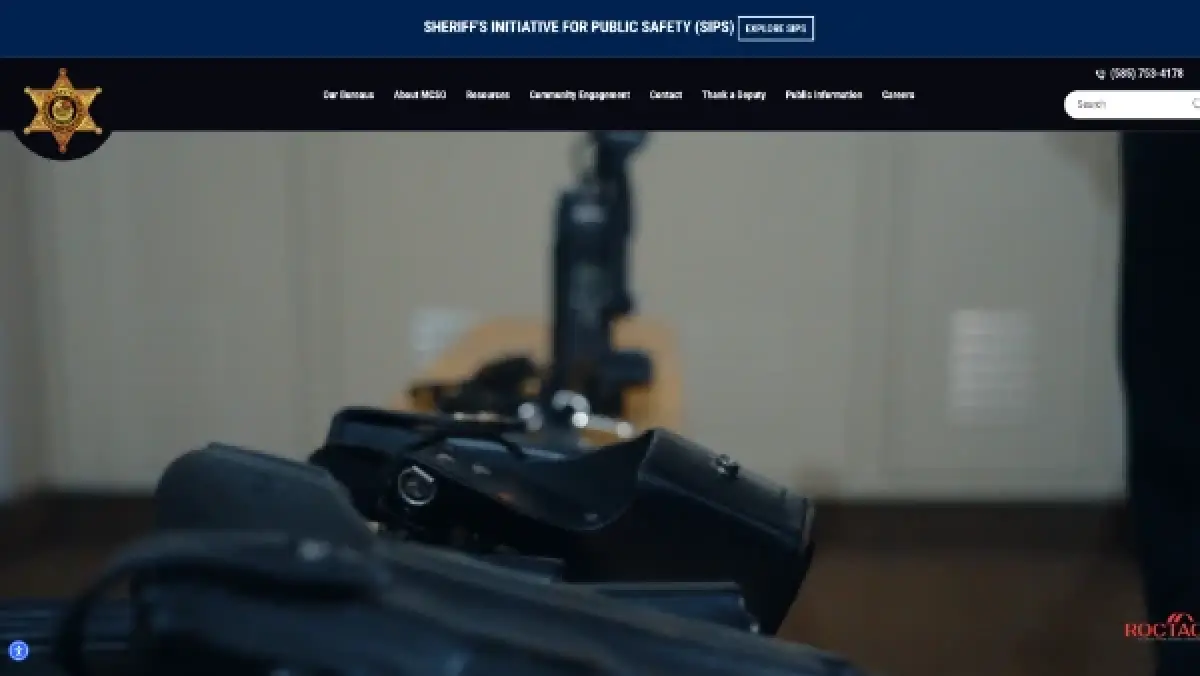
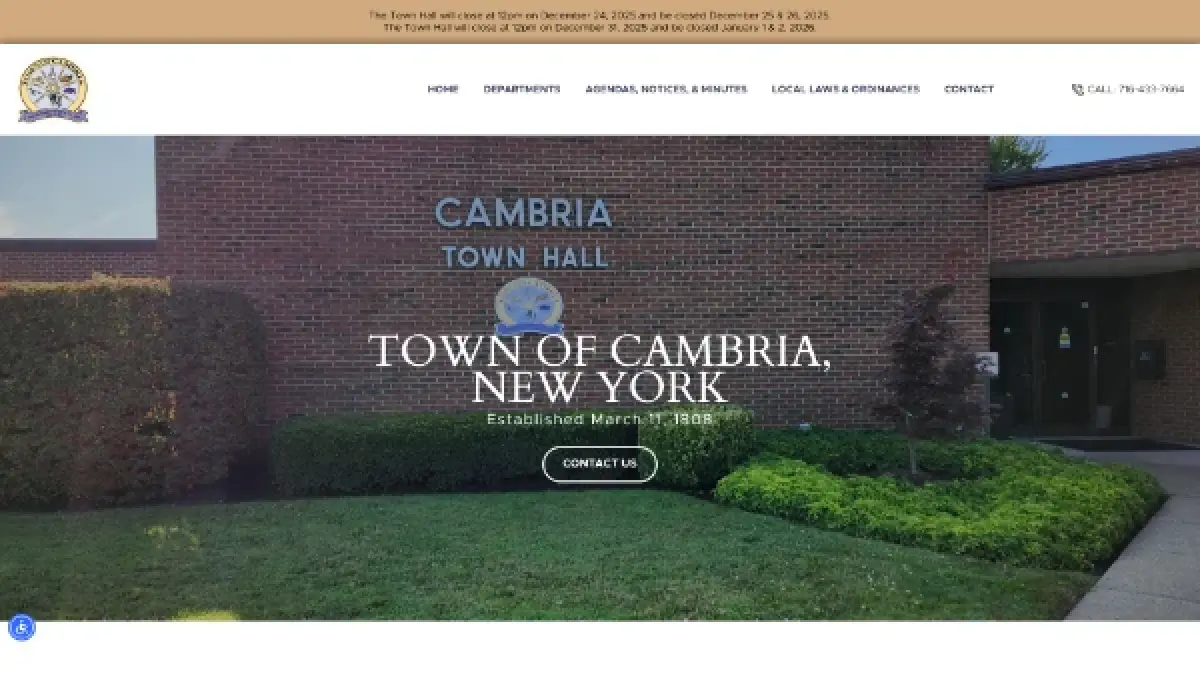
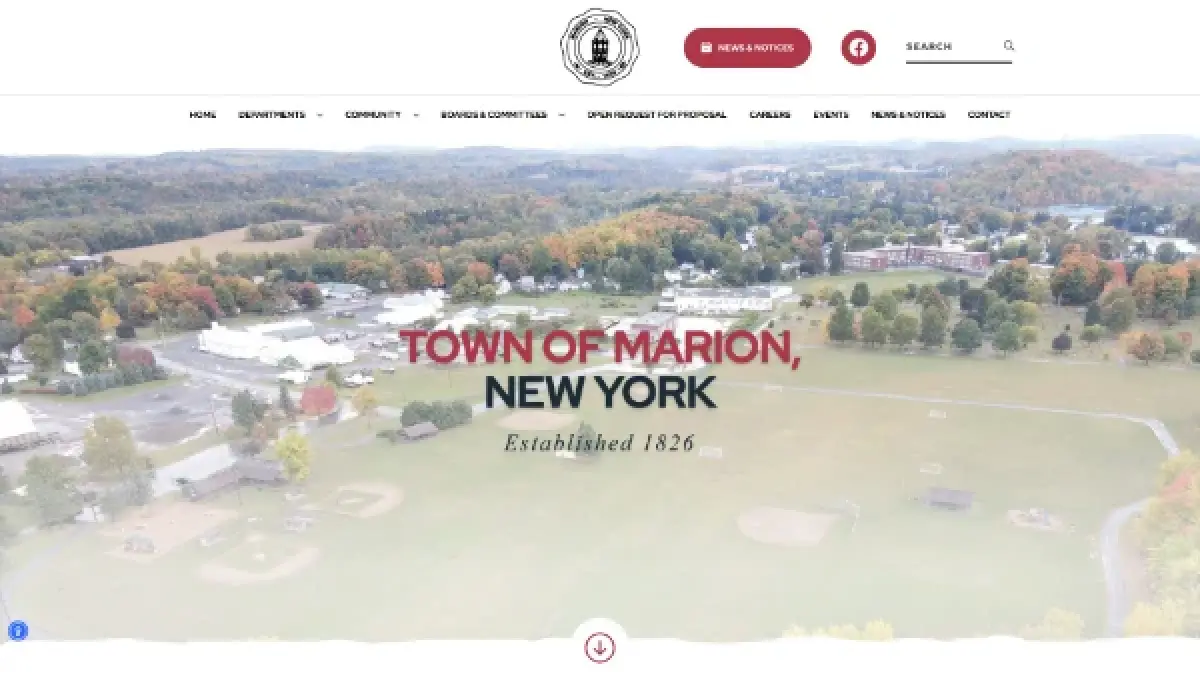
These are active public websites, not generic template previews. Each one uses its own information architecture, services, content, visual system, and operating model.

A public-safety website organizing bureaus, reports, victim resources, community services, public information, careers, contacts, and news.

A municipal website for departments, agendas and minutes, laws, notices, events, public documents, community resources, and contact paths.

A town website connecting residents with departments, boards, requests, recreation, events, notices, documents, and local services.
Managed infrastructure
CMS Max documentation identifies the current platform foundation below. Every procurement should still document the agency environment, data classification, roles, integrations, incident response, recovery objectives, evidence, and contractual service commitments.
Accessibility is an operating practice
The U.S. Department of Justice identifies WCAG 2.1 Level AA as the technical standard for state and local government web content and mobile apps under the ADA Title II web rule. Federal Section 508 requirements are distinct. The public entity remains responsible even when a contractor creates or maintains the experience.
Plan semantic structure, keyboard access, focus, contrast, labels, errors, forms, media, responsive behavior, third-party components, and assistive-technology testing.
Train editors, remediate PDFs and office files, caption media, write useful link and alt text, maintain heading structure, review changes, and provide accessible alternatives.
Combine automated scans with expert and user testing, prioritize barriers, document exceptions, track remediation, publish contact paths, and respond to accommodation needs.
Legal and procurement note: This page is a platform overview, not legal advice or a guarantee of compliance. Applicable law, deadlines, exceptions, standards, records, privacy, security, procurement, and accessibility responsibilities vary by entity and service and require appropriate agency and legal review.
Controlled modernization
Map services, departments, audiences, pages, documents, forms, domains, integrations, owners, analytics, records, accessibility issues, and legal requirements.
Create task-based architecture, reusable content, visual and accessibility standards, roles, review paths, emergency procedures, and acceptance criteria.
Move representative content, remediate high-use files, test forms and integrations, validate redirects, run accessibility and security reviews, and train staff.
Monitor errors and search behavior, preserve rollback, verify critical tasks, maintain redirects, collect public feedback, audit changes, and report progress.
Government website FAQ
Modernization succeeds when the platform decision and the operating responsibilities are reviewed together.
CMS Max can support municipalities, counties, public safety organizations, authorities, special districts, and other public entities that need a managed website, staff publishing, public information, forms, documents, events, notices, and integrations.
No platform can make every page, document, form, video, mobile app, and third-party service compliant automatically. CMS Max provides an accessibility-minded foundation and implementation support, while the public entity owns policy, content, documents, procurement, testing, remediation, accommodations, and legal review.
The U.S. Department of Justice currently identifies WCAG 2.1 Level AA as the technical standard for state and local government web content and mobile apps under the ADA Title II web rule, subject to the rule, exceptions, current compliance dates, and legal guidance. Federal Section 508 requirements are a separate framework for federal ICT.
Authorized staff can manage pages, news, notices, events, careers, locations, forms, media, documents, menus, metadata, and reusable content within the roles and workflows configured for the website. Governance, review, retention, and emergency publishing procedures are defined with the agency.
CMS Max documentation identifies Laravel Cloud hosting with CDN, autoscaling, and a 99.9 percent uptime target, plus WAF and DDoS protection, automated SSL, and SOC 2 Type II and SOC 1 Type II controls. Final hosting, backup, recovery, support, security, and compliance requirements should be documented for the specific procurement.
CMS Max currently powers public websites on .gov domains. Domain eligibility and registration remain governed by the official .gov program, while DNS, certificates, redirects, email dependencies, ownership, renewals, and launch timing are coordinated with the authorized government team.
Yes. CMS Max can support public forms, file uploads, payments, applications, event registration, contact workflows, and integrations when the use case, data classification, retention, accessibility, privacy, security, records, and support requirements are approved.
Plan a government website
Share the entity type, current website, .gov domain, population served, departments, documents, forms, integrations, accessibility work, procurement path, timeline, and staff workflow.
The world's fastest and most SEO friendly website code.