Inventory before replacing
Find every layout, utility, component, plugin, custom stylesheet, data attribute, jQuery dependency, browser requirement, and business workflow.


Frontend modernization
A framework upgrade succeeds when the website still works for people.
Bootstrap 5 removed the jQuery dependency, changed JavaScript data attributes, revised forms and utilities, dropped older browser support, and continued evolving through the 5.x line. An upgrade needs an inventory, component mapping, accessibility review, regression testing, and production acceptance.
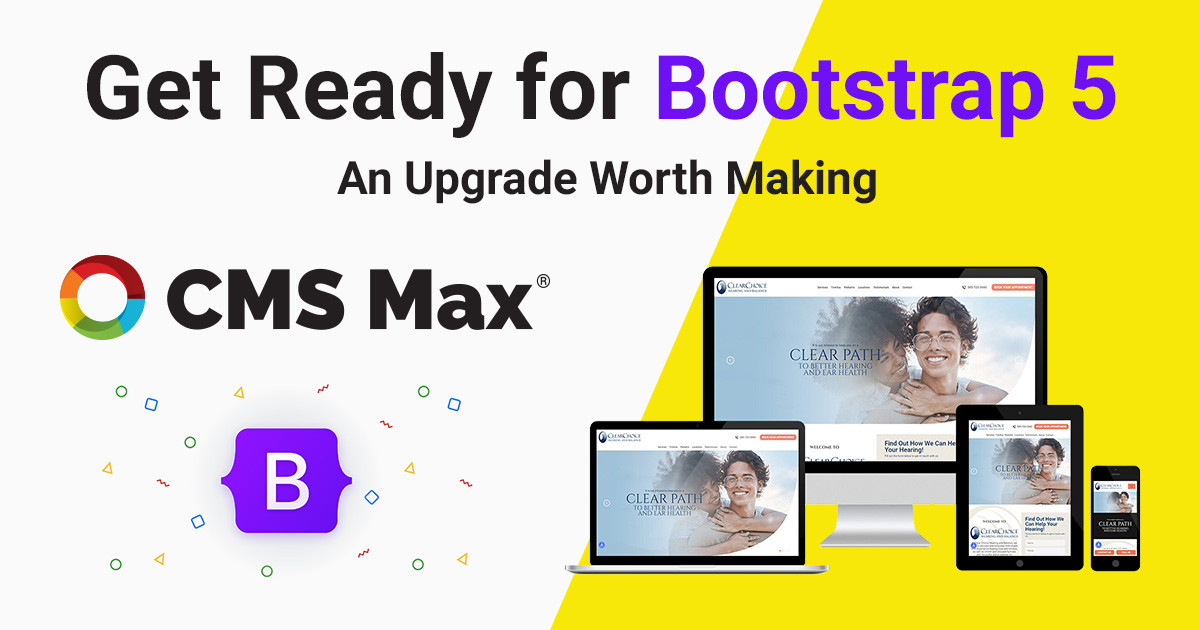
Decision frame
Find every layout, utility, component, plugin, custom stylesheet, data attribute, jQuery dependency, browser requirement, and business workflow.
Bootstrap 5 changed forms, utilities, markup, JavaScript events, data attributes, dependencies, browser support, and component behavior.
Test representative content and every important responsive, interactive, accessible, form, search, account, and commerce state.
Practical controls
Review containers, breakpoints, gutters, columns, ordering, overflow, sticky elements, and custom responsive assumptions.
Map changed classes and markup, then test labels, errors, keyboard flow, autofill, uploads, payment controls, and submission states.
Replace retired data attributes and APIs, review Popper usage, remove obsolete jQuery dependencies, and test dynamic lifecycle events.
Audit renamed or removed utilities, maps, variables, import order, custom builds, specificity, and generated file ownership.
Verify semantic structure, focus, keyboard operation, labels, dialogs, menus, contrast, motion, errors, and responsive reflow.
Measure page weight, caching, errors, analytics, integrations, real content, browser support, and key conversions after release.
Implementation workflow
Capture framework versions, builds, overrides, components, pages, scripts, dependencies, target browsers, and business-critical journeys.
Create an old-to-new component and API matrix with breaking changes, owners, test cases, and rollback points.
Upgrade the build and migrate reusable patterns first, then page-specific and third-party behavior.
Run automated checks plus desktop, mobile, keyboard, zoom, reduced-motion, form, search, account, and commerce tests.
Deploy in controlled stages, monitor errors and outcomes, and remove obsolete dependencies only after acceptance.
Practical reference
Current evidence
Frequently asked questions
No. Removing dependencies or using a smaller build can help, but production performance depends on the complete page, media, code, backend, fonts, scripts, caching, and integrations.
No. Search outcomes depend on content, crawlability, relevance, technical signals, experience, authority, and competition. Test the actual result.
Some markup may still render, but forms, utilities, data attributes, JavaScript APIs, and custom plugins require a documented migration review.
Not always. Compare a controlled framework migration with a broader redesign or platform rebuild based on risk, maintainability, requirements, and total cost.
CMS Max can replace brittle frontend layers with a managed website platform, reusable design system, governed content, integrations, and complete release testing.
The world's fastest and most SEO friendly website code.