

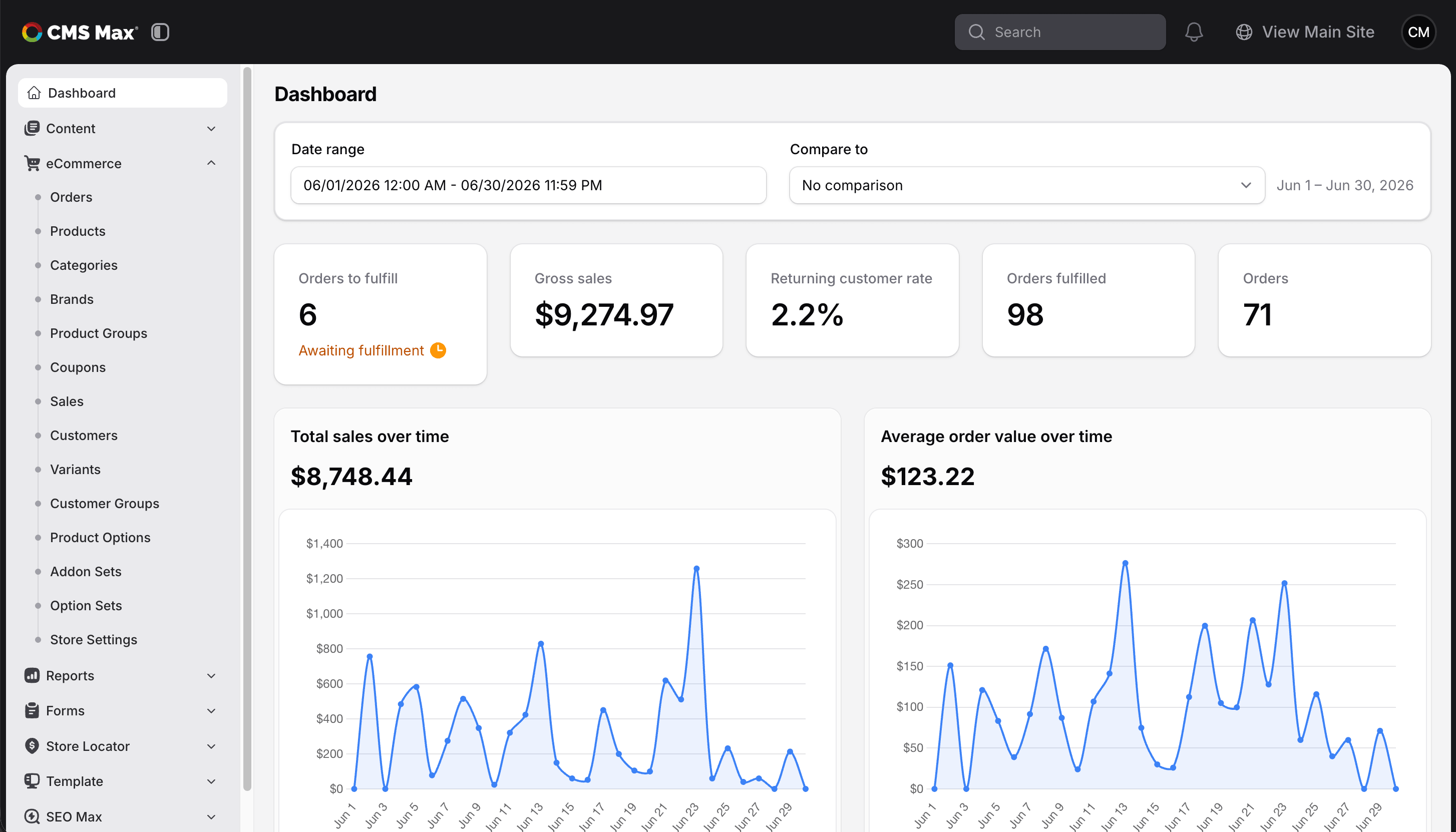
CMS Max combines a multi-tenant Laravel application, Filament operations, reactive interfaces, queues, media delivery, commerce modules, APIs, and MCP tools.
This architecture overview describes verified CMS Max application components and clearly separates platform capability from configuration, provider, and customer responsibility.
Current application foundation
- Laravel and multi-tenancy: the application organizes tenant-specific content, settings, domains, users, commerce records, plugins, and URLs within a shared platform architecture.
- Filament administration: resources and configuration pages manage operational records with role-aware controls.
- Livewire, Alpine.js, and Tailwind CSS: server-driven interactivity and the active theme system support storefront and administration experiences.
- Queues and scheduled work: background jobs handle eligible imports, synchronization, notifications, indexing, media, and other long-running operations.
- Media and delivery: stored media can be transformed and delivered through CMS Max media and CDN services where configured.
Commerce and extensibility
- Native ecommerce resources cover products, variants, categories, brands, customers, orders, fulfillment, promotions, payments, forms, and feeds where installed.
- Supported integrations have different boundaries: some are native, some use provider credentials or embeds, some use partner connectors, and some require custom work.
- The versioned ecommerce API exposes supported resources, while the CMS Max MCP server provides structured tools for supported website operations.
- Theme files, reusable sections, layouts, widgets, global scripts, and plugin settings provide controlled extension points.
Security and reliability are shared work
CMS Max uses framework, application, infrastructure, authentication, validation, caching, and operational controls. Current hosting-provider assurance information belongs in the Laravel Trust Center. No architecture eliminates the need for least-privilege access, secure provider accounts, data governance, monitoring, tested changes, incident procedures, and customer-side controls.