

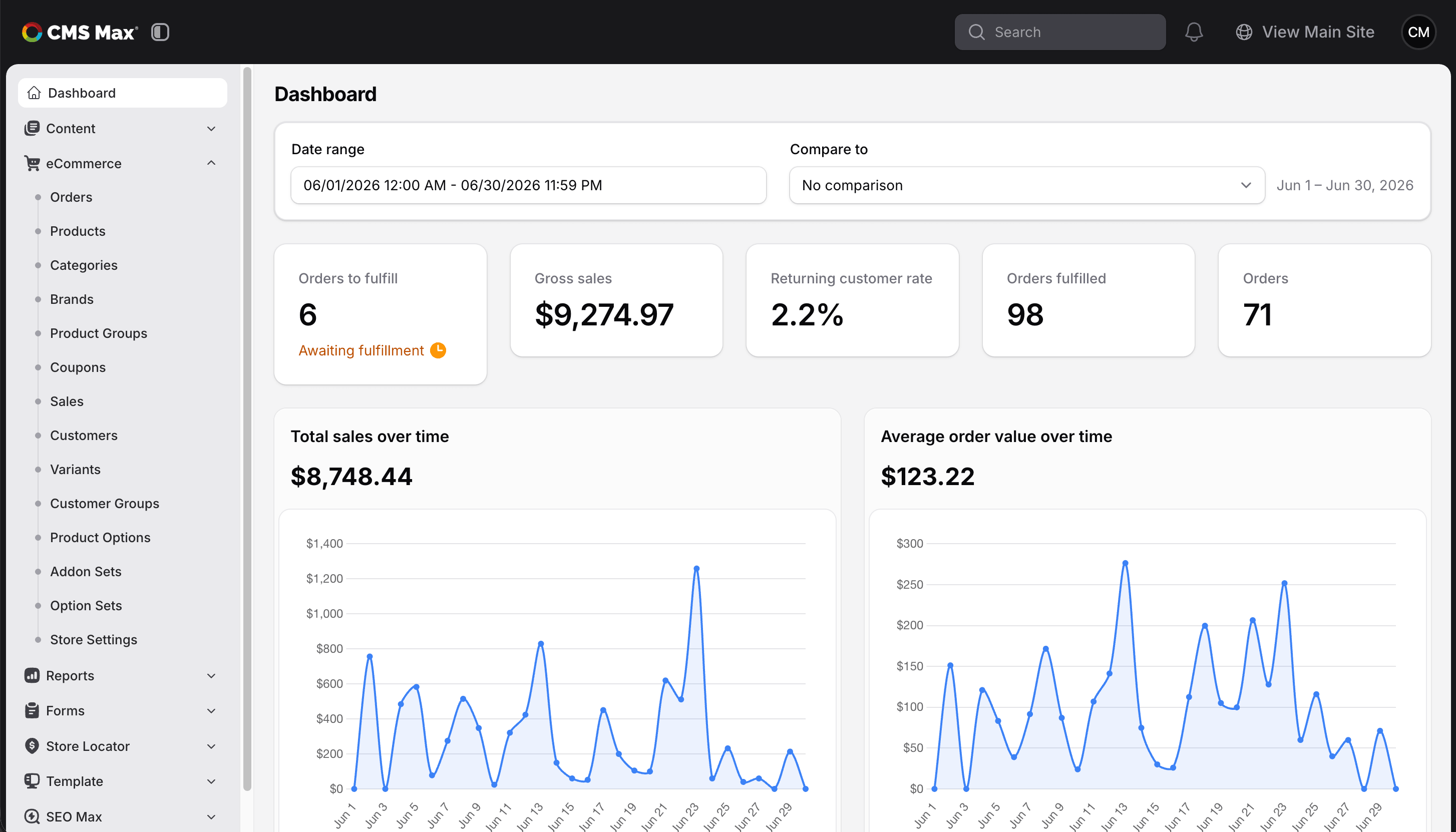
The most important difference is the operating model: CMS Max is managed as a platform; WordPress is commonly assembled and operated as a self-hosted stack.
Compare CMS Max and WordPress by ownership, maintenance, extensibility, commerce workflow, support, data movement, cost, and governance rather than universal rankings.
How the operating models differ
| Decision | CMS Max | Typical self-hosted WordPress |
|---|---|---|
| Platform operation | CMS Max manages the application platform and coordinated releases. | The site owner or provider selects hosting and operates core, theme, and plugin updates. |
| Extension model | First-party modules, supported integrations, APIs, MCP tools, and scoped custom work. | A broad third-party plugin and theme ecosystem with owner-selected compatibility. |
| Commerce | Native CMS Max ecommerce records, checkout, operations, feeds, and integrations where enabled. | Often added through WooCommerce and its extension ecosystem. |
| Responsibility | Shared between CMS Max, implementation partners, connected providers, and the customer. | Shared among the owner, host, developers, plugin vendors, theme vendors, and providers. |
Evaluate the actual fit
- List required content types, products, checkout rules, forms, integrations, permissions, reporting, and migration needs.
- Separate native CMS Max behavior from partner connectors, configuration, and custom implementation.
- Compare total operating responsibility, not only license or hosting price.
- Validate data import and export, redirect strategy, SEO preservation, analytics, and launch support.
- Run a scoped discovery with real workflows before selecting a platform.