Model current provider resources
Use carrier IDs, services, packages, warehouses, shipments, labels, tracking, and webhooks from current documentation.


Reviewed shipping API path
Design a shipping API connection around current provider naming, environments, carriers, and merchant operations.
ShipEngine is becoming ShipStation API while its documented endpoints remain available. The current CMS Max core repository does not include a maintained ShipEngine package, so new work should be scoped as a custom API implementation or compared with the native CMS Max ShipStation and Shippo paths.
Operating model
Each API action has different financial, carrier, customer, and recovery consequences.
Use carrier IDs, services, packages, warehouses, shipments, labels, tracking, and webhooks from current documentation.
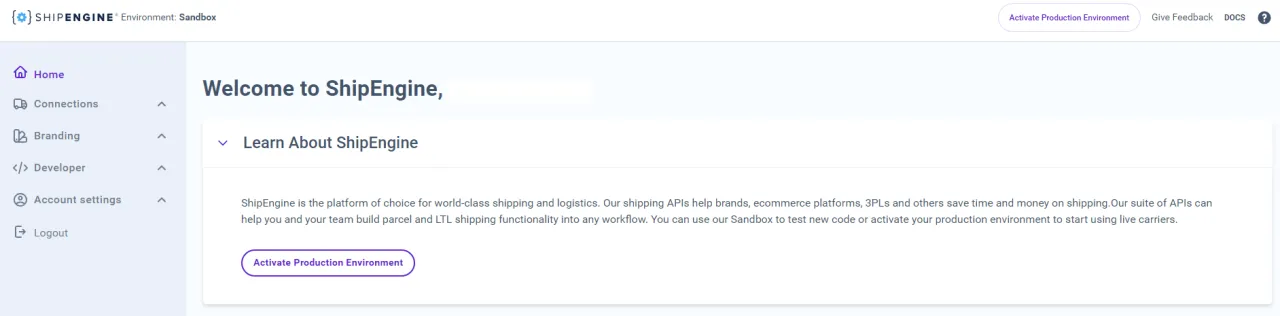
Sandbox labels cannot ship and sandbox rates may differ from production; never treat a sandbox quote as a commercial promise.
Label creation can purchase postage. Use idempotency, authorization, retries, void policy, audit context, and reconciliation.
Current CMS Max capability
Carrier availability, plans, account connections, rates, labels, tracking, manifests, and provider naming continue to evolve.
List connected carriers and preserve provider carrier IDs and connection state.
Build shipment requests from validated origin, destination, parcel, service, and customs context.
Create a label only once for an approved shipment and store cost, carrier, service, label, and tracking references.
Define eligibility, provider response, order update, customer communication, and reconciliation for a cancelled label.
Map provider events to CMS Max fulfillment context without overwriting unrelated order or payment state.
Retain request IDs, timestamps, safe payload summaries, errors, retries, and owner-visible recovery actions.
Step-by-step workflow
Include the warehouse and finance teams in acceptance because API success alone does not prove a shippable package.
Compare native CMS Max shipping paths with the exact reason a direct API connection is needed.
Generate test credentials and understand supported carriers, labels, and rate differences.
Define carriers, warehouses, parcels, services, customs, order states, labels, tracking, and errors.
Exercise valid, invalid, duplicate, timeout, unavailable-rate, label, void, tracking, and international cases.
Connect production carriers, fund or bill accounts, purchase a controlled label, void when appropriate, and reconcile.
Practical reference
Provider documentation says integrations do not need to change endpoints during the rebrand, but public names and account interfaces may shift.
Current references
Interfaces, policies, plans, services, pricing, and requirements can change. Verify the current CMS Max configuration and official provider sources during implementation.
ShipEngine FAQ
Turn each answer into configuration, representative testing, monitoring, ownership, and a documented recovery path.
Yes. Current provider documentation announces the rebrand and says existing endpoints will continue to function.
No maintained ShipEngine package was found in the current CMS Max core repository. Treat new work as a reviewed custom integration.
No. Provider documentation states that sandbox labels are not valid for shipment.
CMS Max already has maintained native paths for those providers, which may reduce custom development and support work.
A controlled live rate, label, print, tracking, void or correction, order update, customer notice, and financial reconciliation.
Build for real operations
CMS Max can compare native and custom paths before the merchant commits to another carrier API connection.
The world's fastest and most SEO friendly website code.